How to Use the TNREGINET Building Value Calculator
Use the building calculator for construction, and the guideline search for land. Choose a rate period matching your valuation date, enter each floor only once and check the result’s breakdown. The amount depends on the specifications supplied; it is an estimate to review before registration.
- Open TNREGINET and find Calculate Building Value on the homepage.
- Select the building type, region, calculation period and insertion unit.
- Enter the building’s age and any classification requested.
- Add each floor, its area, material type, wood type and roof type.
- Enter applicable flooring, amenities, portico, compound wall and garage details.
- Submit using the form’s calculation control. Review the inputs and preserve the result for comparison.
Select English or Tamil on the portal as needed. In Tamil, building valuation is commonly described as கட்டிட மதிப்பீடு.
Building Details to Keep Ready
Use an approved plan or measured floor schedule. Plinth area generally measures the covered footprint, including walls; carpet area measures usable interior space. Do not substitute the plot area or an advertised super built-up area for the floor measurements requested.
| Input | What to check |
|---|---|
| Building type and region | Match the structure and the location category offered in the form. |
| Calculation period and age | Select the applicable valuation date and completed building age. |
| Insertion unit and floor area | Choose square feet or square metres; enter each floor separately. |
| Material, wood and roof | Match the walls and woodwork; identify an RCC slab, Madras Terrace or tiled roof. |
| Amenities and extra structures | Include flooring, services, portico, garage and compound wall where requested. |
For unit checks, 1,000 square feet is approximately 92.90 square metres. The unit attached to an area must match the rate used. Ask an engineer if you cannot identify RCC framing, load-bearing walls or a roof specification.
RCC framed construction carries loads through reinforced-concrete columns and beams; load-bearing construction relies on walls. Having a concrete roof alone does not establish the frame type. Select the listed combination matching the actual structure.
Building Value Calculation: Formula and Example
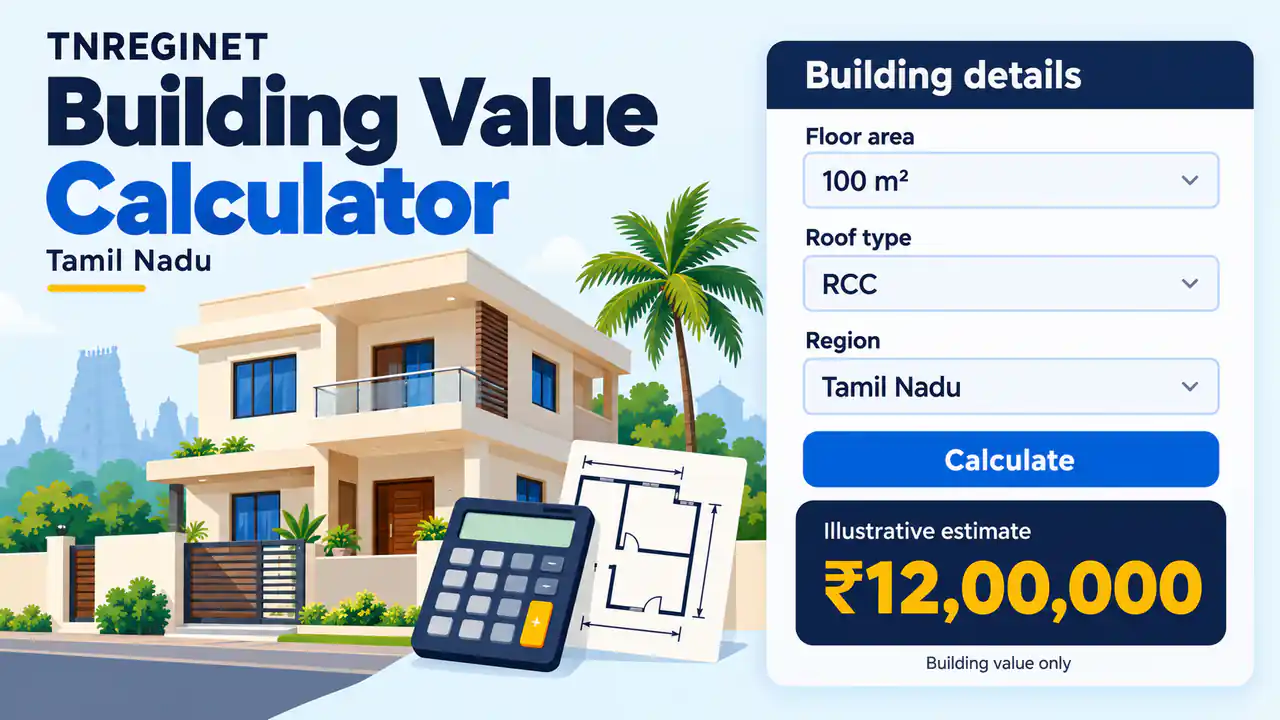
A basic floor value is plinth area × applicable rate. Age-related deductions, regional adjustments and relevant extras then affect the total. Floor rates can differ, so one rate multiplied by the whole building area may not reproduce the official calculation.

Illustration only: assume 100 m², a ₹12,000/m² rate, 10% age deduction, 5% regional addition and ₹66,000 in extras. These are teaching inputs, not current government rates or a prescribed calculation sequence.
| Stage | Working | Amount |
|---|---|---|
| Base construction value | 100 m² × ₹12,000/m² | ₹12,00,000 |
| Illustrative age deduction | 10% × ₹12,00,000 | −₹1,20,000 |
| Value after age deduction | ₹12,00,000 − ₹1,20,000 | ₹10,80,000 |
| Illustrative regional addition | 5% × ₹10,80,000 | +₹54,000 |
| Illustrative amenities | Assumed separate amount | +₹66,000 |
| Illustrative building total | ₹10,80,000 + ₹54,000 + ₹66,000 | ₹12,00,000 |
PWD Plinth Area Rates and Building Depreciation
The Public Works Department, Government of Tamil Nadu publishes plinth-area schedules used in building valuation. The Registration Department, headed by the Inspector General of Registration, operates TNREGINET. Construction class, floor, region, amenities and age affect the selected rates or adjustments.
Use the depreciation table applicable to the construction class. A rule such as “deduct 2% every year” can give a different result. Building valuation also differs from a contractor’s construction-cost-per-square-foot quotation.
The archived PWD schedule for 2025–2026 shows separate floor rates and excludes land. Its stated period ends on 15 August 2026. For a later date, confirm the applicable schedule on TNREGINET or with the SRO instead of treating the archive as the latest rate list.
Building Value, Land Guideline Value and Apartment Value
| Value | Meaning |
|---|---|
| Building value | Construction component, based on area and specifications. |
| Land guideline value | Location-based land rate found by street or survey details. |
| Market value | Potential sale price, influenced by demand and comparable sales. |
Find land rates using the correct street or survey details in our TNREGINET guideline value guide. The building result does not identify a property’s likely selling price. Market valuation needs comparable local transactions and the property’s condition.
Flats, UDS and Composite Value
For a flat, distinguish its construction area from its undivided share (UDS) of land. Confirm whether the transaction uses a composite value covering both components before adding them separately. Ask the Sub-Registrar Office (SRO) which valuation method applies to your deed.
Stamp Duty, Registration and Property Checks
Use the applicable deed type and assessed valuation when planning stamp duty and registration fees. An Encumbrance Certificate records registered dealings; Patta Chitta is a revenue record. Neither replaces building measurements or guarantees a valuation.
Common Building Valuation Errors and Fixes
| Problem | Fix |
|---|---|
| Unexpectedly high result | Check units, duplicate floors and amenities counted twice. |
| Construction option missing | Confirm the materials with an engineer; do not select an unrelated class. |
| Older rate displayed | Review the calculation period and its effective dates. |
| Portal not loading | Retry later through the official homepage; avoid entering details on a lookalike site. |
Keep the selected period, floor schedule and result together. For commercial, industrial or unusual structures, confirm the required assessment with the registering office rather than assuming ordinary residential rates apply.
Frequently Asked Questions
Is the TNREGINET building value calculator free, and does it need login?
The building estimate has been offered as a public calculator, separate from document registration and payment services. Open it through the official homepage first. If access requirements change, follow the instructions displayed there; do not create an account or pay a third party simply to read this guide.
How do I calculate building value for registration in Tamil Nadu?
Choose Calculate Building Value on TNREGINET, select the region and applicable period, then enter building age and each floor’s area and construction details. Add the extra structures requested by the form. Review the estimate with the registering office, because the calculator does not settle the final valuation.
Does the building value include the land?
The PWD plinth-area method values construction separately from land. Check the land guideline value through the appropriate street or survey search. For an apartment, also confirm whether a composite rate applies, since adding land and construction again could duplicate components already included in that rate.
Can I download a building valuation certificate as PDF?
Use the result’s print or download facility if one is provided. Otherwise, browser Print and Save as PDF can preserve the estimate and its inputs. A saved calculator screen is not automatically a certified valuation certificate; ask the receiving SRO or lender which document it requires.
Can I use this building value for a bank loan?
Use the estimate to understand the construction component and plan your transaction. A bank may require a separate report from its approved valuer, with inspection and supporting documents. Confirm the lender’s requirements before submitting a calculator printout, since registration valuation and lending valuation serve different purposes.