How Do You View a TSLR Extract Online?
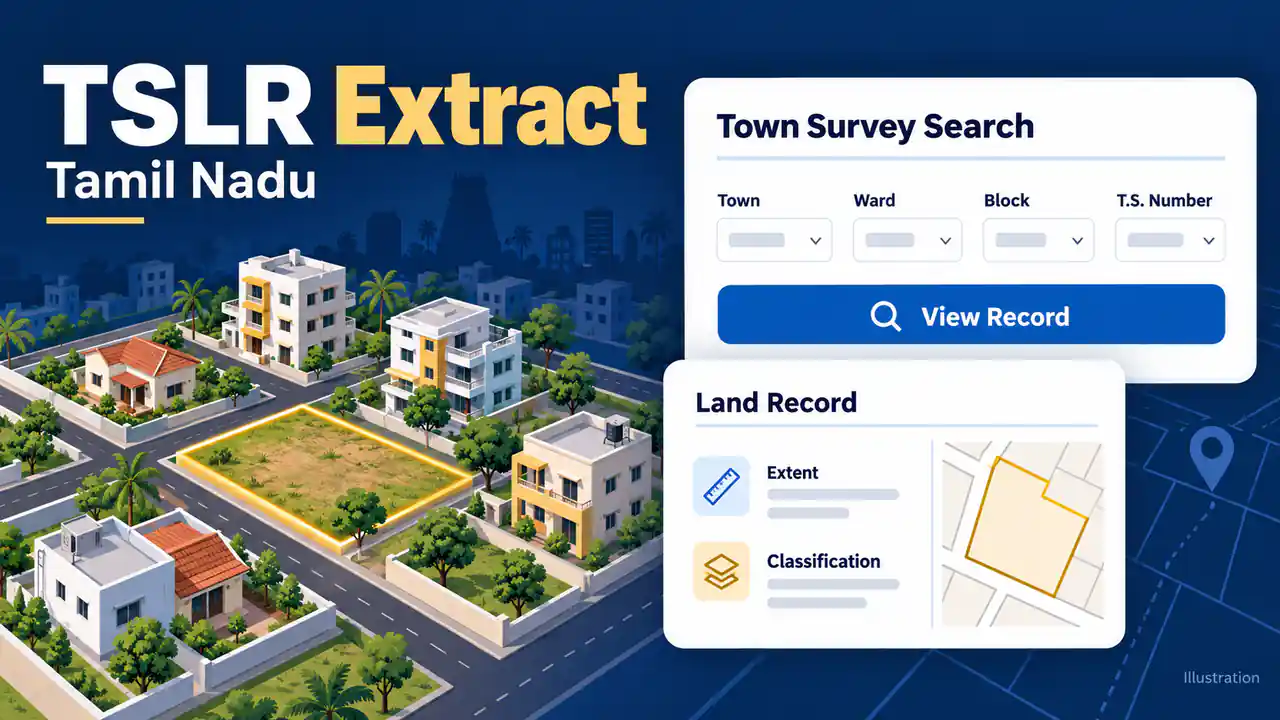
Have a deed or earlier extract beside you so you can copy the survey particulars accurately. Select the property's district and the urban or TSLR option on the official portal. Use the town-survey identifiers requested by the form; a door number is not a substitute for them.
- Open Tamil Nadu land-records e-Services and find the TSLR extract service.
- Choose the district and any taluk selection shown, then the town, ward and block.
- Enter or select the T.S. number and subdivision as requested. Complete the verification displayed on the live form.
- Submit the search and check that the returned parcel matches your documents before saving it.
The National Government Services Portal confirms these urban search identifiers. Menu wording and verification steps can change.
What Is a TSLR Extract, and What Should You Check?
TSLR means Town Survey Land Register. Its extract gives the recorded particulars of a town-survey parcel. Tamil Nadu's Survey and Settlement Department describes towns as wards divided into blocks, with individual Town Survey Numbers identifying parcels. Check that hierarchy before interpreting the holder's name or the land's extent.
| Entry | Your check |
|---|---|
| Town, ward and block | Match the complete location, not just the street address. |
| T.S. number / subdivision | Check the exact parcel and any subdivision shown. |
| Recorded holder | Compare the entry with the deed and approved transfer. |
| Extent | Read the unit printed on the extract before comparing area. |
| Classification / remarks | Review the recorded category and qualifications, not just the name. |
The department's urban land-records presentation shows the survey structure and a sample extract. Fields can vary; read the labels on your own copy.
How Do You Download or Save the TSLR Extract as a PDF?
For rural land, see how to download Patta Chitta instead.
Once the correct result appears, use its Download or Print control if available. Otherwise, open your browser's print dialog and choose Save as PDF. Preview every page so the location, survey particulars and verification reference remain visible. Saving a page does not change the record's authentication status.
Retain the unedited file and retrieval date. Where the extract offers a reference number and verification instructions, follow them on the official portal; compare the retrieved particulars with your copy.
TSLR Extract vs TSLR Sketch, Patta Chitta and EC
- TSLR extract: the written town-survey entry used to compare the parcel's recorded particulars.
- TSLR sketch: the survey drawing; request it separately when you need mapped parcel details.
- Patta / Chitta: use the appropriate revenue-record search for land under village survey. If you are unsure how they differ, read Patta vs Chitta.
- EC: check registered dealings for a selected period through TNREGINET EC View.
For a purchase, loan or building-approval application, match the required records to the deed. Revenue entries do not independently confer title, as the Supreme Court explains in paragraph 8.2. Neither a TSLR entry nor an EC alone replaces a review of the title documents.
What Should You Do If the TSLR Record Is Missing or Incorrect?
Check the selected town, ward, block and subdivision first. A missing result does not establish who owns the property. If an older deed uses a different survey number, ask the Taluk survey office for the corresponding town-survey details. For an incorrect entry, request the applicable correction or transfer process.
- Old survey number: ask for a correlation statement. Tiruppur's published statements illustrate this record type.
- Wrong holder or extent: bring the deed, extract and supporting records to the revenue office; keep the acknowledgement.
- Portal unavailable: retry later or ask the Taluk office about obtaining the extract. Confirm certified-copy charges there.
For earlier transfers, see our old owner land-records guide. To check a village-survey record instead, see how to view Patta Chitta online.
Frequently Asked Questions
Can I search TSLR with only an owner name?
Prepare the parcel identifiers rather than relying on a name. The urban lookup uses location and survey details, including town, ward and block. If you only have a name or street address, take the available deed to the Taluk office and ask how to identify the town-survey parcel.
How do I find a TSLR extract for Chennai?
Use the same state land-records portal and select the revenue location that covers the property. Take the town-survey particulars from an existing record or deed. Do not substitute a property-tax ward for the survey ward without confirmation; ask the relevant revenue office if the identifiers are unclear.
What if the TSLR extract shows the previous owner?
First match the survey number and subdivision to your registered deed. Then check whether the revenue transfer was processed and whether the entry needs correction. Take the deed, existing extract and any application acknowledgement to the Taluk office. Reprinting the record alone will not update the holder.
Is a saved TSLR PDF enough for a bank or registration?
Ask the receiving office which version it accepts. A browser-saved PDF preserves what you viewed, but saving it does not add certification or a digital signature. Keep any original verification details intact and request an authenticated or certified copy when the lender or authority requires one.
What does TSLR stand for?
TSLR stands for Town Survey Land Register. It is the register used for survey records in town and urban areas, in place of the village-based Patta and Chitta records used for rural and Natham land.
Is a TSLR extract the same as a Patta?
Not exactly. A TSLR extract gives town-survey particulars for urban land, while a Patta is the revenue record issued against a holding. In some towns both may be relevant, so ask the revenue office which record applies to your property.